

A Ceremony Dedicated to The Pioneer Who Taught Words to Travel Faster Than Horses
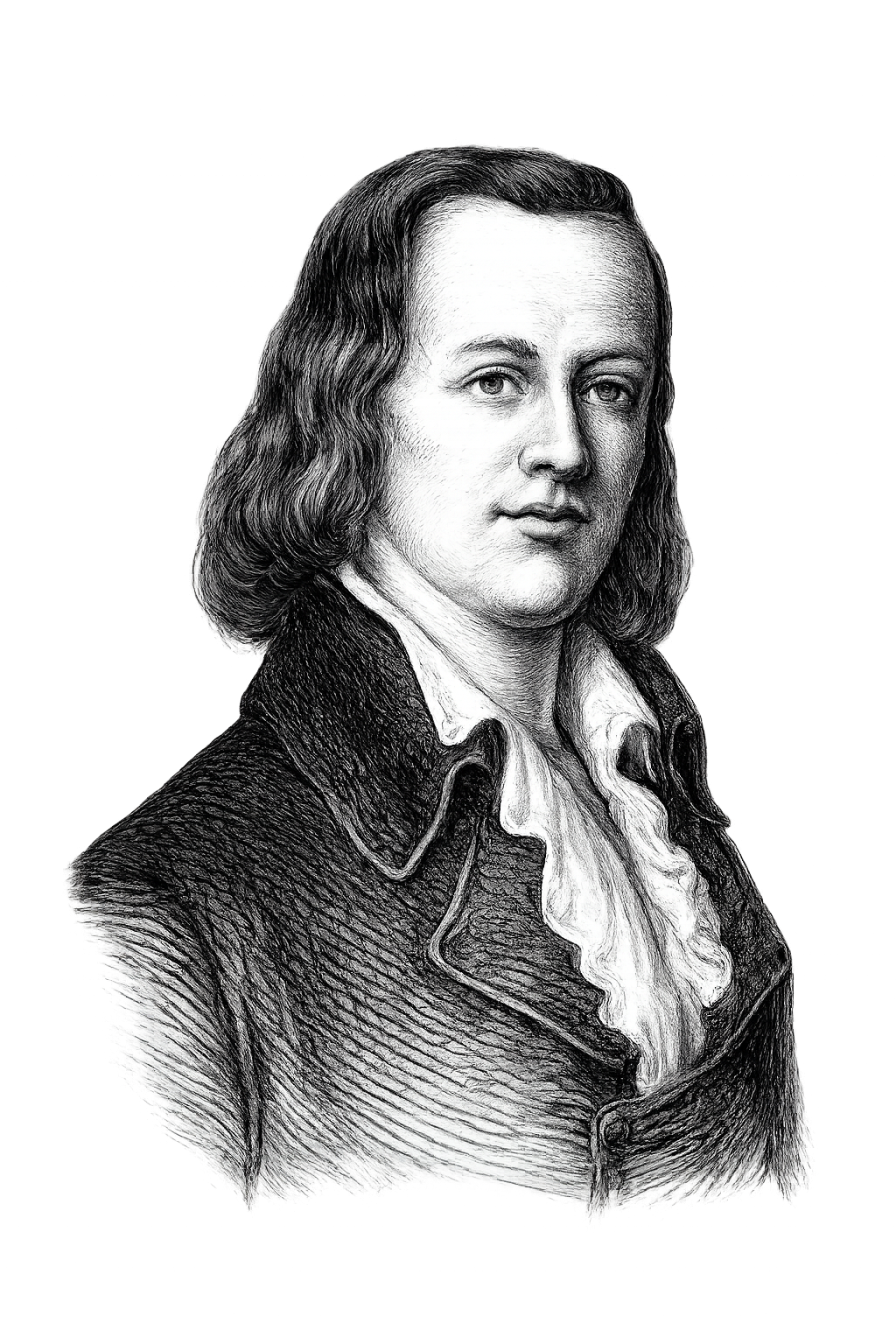
Claude Chappe: The Engineer, The Visionary, The Bridge Across Distance.
Some inventions improve life. And then some inventions transform it, ideas so fundamental, so audacious, that they reorder what is possible for entire civilizations. The Tribute of Glory exists to honor those rare individuals who belong to this prestigious category.
This, the highest and most personal recognition presented at the Antonio Meucci Global Telco Awards, is not a prize for technical achievement alone. It is a salute across centuries, a moment when the telecommunications industry pauses, looks back, and acknowledges the shoulders on which it stands. Each year, we dedicate this tribute to a visionary whose work made the world feel smaller, faster, and more connected.
For the 4th edition of the AMA Awards, that honor belongs to Claude Chappe, engineer, idealist, and the architect of the very first telecommunications network in history.
The Story of Claude Chappe
Picture France in the early 1790s. A nation mid-revolution, tearing itself apart and simultaneously rebuilding. Armies on the move. Borders contested. Decisions made in Paris that would determine the fate of campaigns hundreds of kilometers away, yet news could only travel as fast as the fastest horse. A single urgent message might take two, three, or even five days to reach its destination. In that gap between intention and information, battles were lost, opportunities dissolved, and governments stumbled in the dark.
Claude Chappe, born in 1763, was watching. A quiet man of deep ambition and startling clarity of thought, he saw what others had accepted as the immovable condition of his era, the slowness of information. He asked a question nobody had asked quite so urgently before: what if messages did not need to travel with the messenger?
He was not a soldier or a politician. He was an engineer with an engineer's Exquisite obstinacy, the kind of person who, when confronted with a problem, refuses to accept that it is simply the nature of things. Chappe had already experimented with synchronized clocks and acoustic signaling before he arrived at his defining idea. It would not come easily. His early prototypes were vandalized. His reputation was attacked. He faced ridicule from contemporaries who could not imagine what he could already see. But Claude Chappe kept building.
"What if messages did not need to travel with the messenger?"
The Birth of the First Telecommunications Network
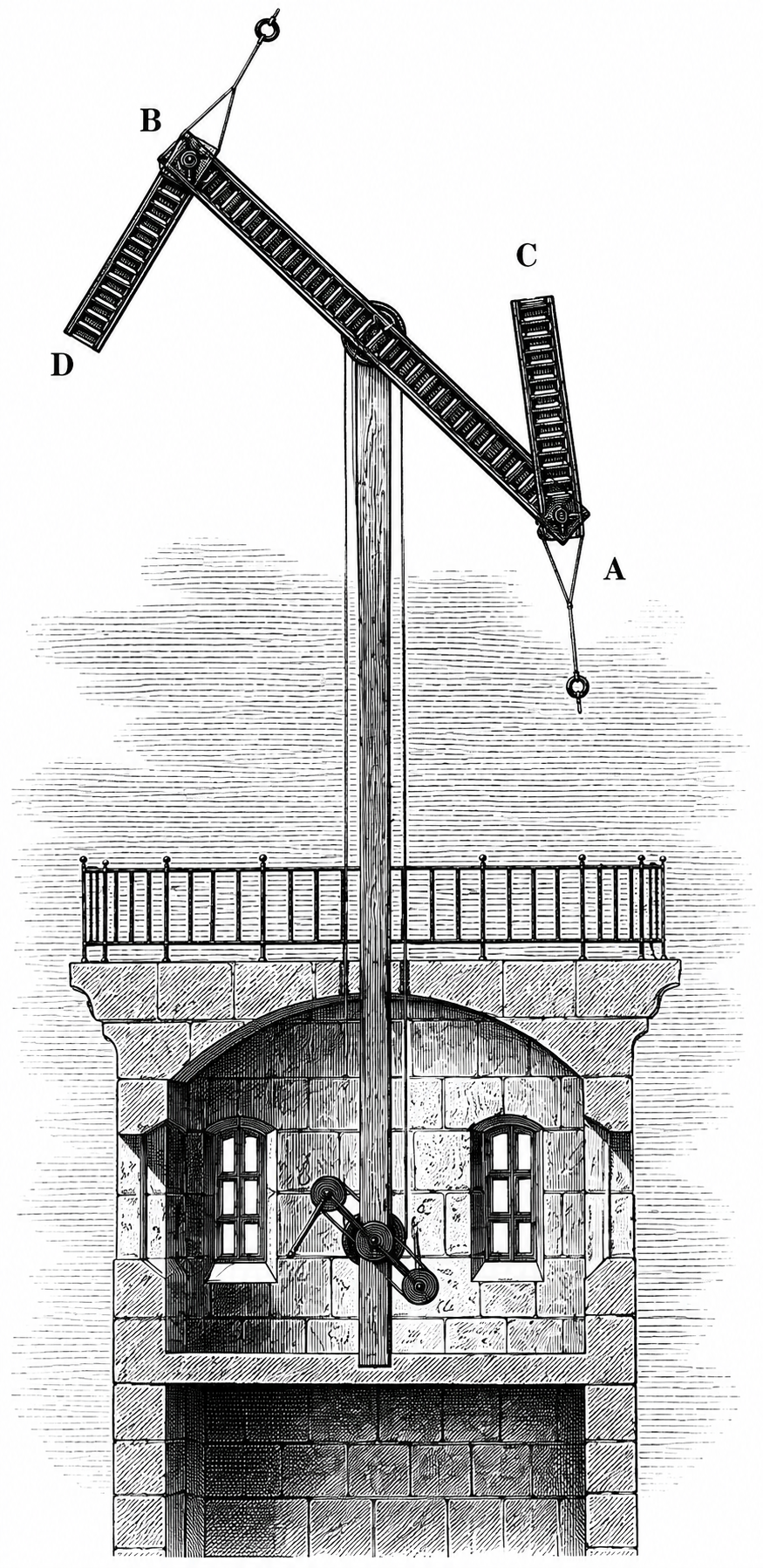
In 1792, Chappe demonstrated his optical semaphore telegraph to the French Legislative Assembly. The principle was elegant in its simplicity, and brilliant in its ambition: a series of towers, each within sight of the next, and each bearing a mechanical arm whose position could be adjusted to represent letters, numbers, and codes. A trained operator at each station would read the configuration of the previous tower and relay it forward. So a message would cascade across the landscape, station by station, at breathtaking speed.
The French government was convinced. By 1794, the first operational line stretched from Paris to Lille, a distance of over 200 kilometers, spanned by a chain of 22 towers. When news of the recapture of Condé-sur-l'Escaut from enemy forces was transmitted from Lille to Paris in under an hour, the world changed. A message that had previously required two days by courier now arrived in minutes.
Chappe called his system the "tachygraph," a fast writer. Others would rename it the telegraph. Within a few years, the network expanded in every direction from Paris, ultimately encompassing more than 500 stations and covering thousands of kilometers across France and into neighboring territories. For the first time in human history, a government could communicate with its frontiers in real time. Information had broken free of the physical constraints of the human body.
"For the first time in human history, a government could think and act at the speed of light, and everything changed."
His Legacy in Modern Telecommunications
Every generation of communications technology traces a line back to the insight Chappe embodied: that human beings are fundamentally separated by geography, and that the most transformative thing we can do is find new ways to bridge that distance. His semaphore towers were the first practical answer. But the answer has never stopped evolving.
Today's global telecommunications infrastructure, mobile networks blanketing continents, cloud systems processing billions of transactions per second, satellite constellations bringing connectivity to the farthest corners of the earth, is built upon the same foundational promise that Chappe made to his government in 1792. We can reach each other. We can do it quickly. And in doing so, we become something more than we were before.
Chappe's greatest achievement was not, in the end, any particular mechanism. It was the creation of a network, an interconnected system through which communities separated by distance could act as one. That idea, first embodied in wood and rope on a French hilltop, lives on in every router, every cell tower, every fiber junction, every data center. The network is his legacy. And we are all living inside it.
Why This Tribute Matters
The Antonio Meucci Global Telco Awards exist because we believe that the telecommunications industry has a responsibility not only to build the future, but to remember its past. We bear the name of a man whose own invention was attributed to another, who spent decades watching recognition pass him by, whose genius history took 131 years to be formally acknowledged. That story of overlooked brilliance is one we have vowed to keep telling.
Claude Chappe shares that story in a different key. He was not forgotten entirely, but he was diminished. His innovation was institutionalized, commercialized, and eventually superseded so swiftly that the sheer magnitude of what he had accomplished became easy to overlook. He died in 1805, by his own hand, worn down by professional disputes and the relentless pressures of defending his legacy against detractors. History, in those years, was not kind to its pioneers.
What Antonio Meucci and Claude Chappe share is more important than what separates them. Both were men of extraordinary imagination who chose to turn that imagination toward the problem of human connection. Both faced adversity, skepticism, and institutional resistance. Both left the world with something that outlasted the indignities of their lifetimes. And both deserve to be remembered, not as footnotes, but as the founders of the world we inhabit.
Every time a voice travels across a continent in an instant, every time a message bridges an ocean in milliseconds, every time a family separated by thousands of kilometers sees each other's faces in real time, there is an invisible architecture behind that miracle. It was built by many hands, across many centuries. But somewhere near the beginning, there is a hillside in France, a wooden tower, a set of mechanical arms moving against the sky, and a man who believed, with everything he had, that the distance between human beings could be transcended.
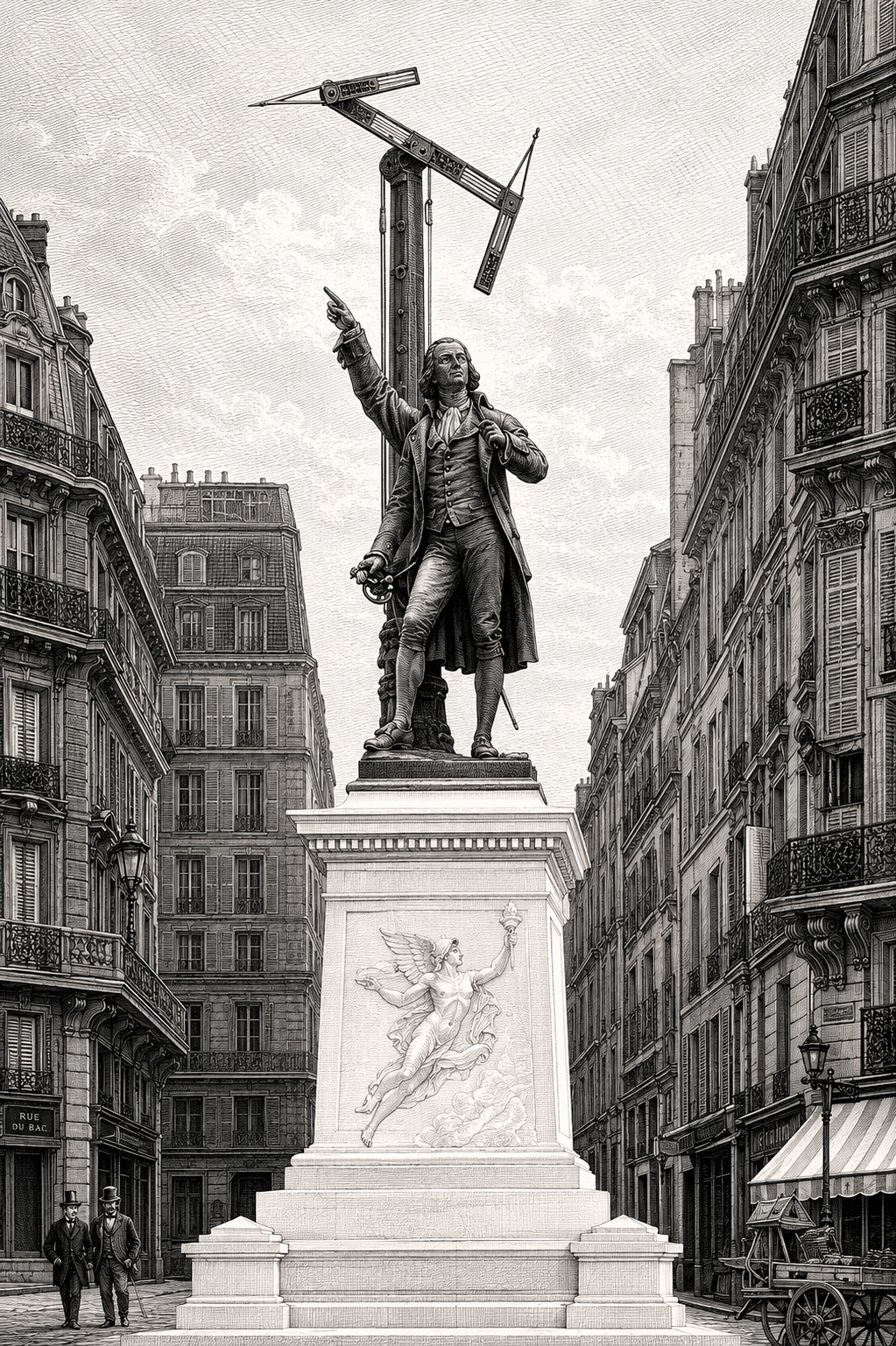
That man was Claude Chappe. More than two centuries after his towers first carried words faster than anyone had thought possible, the global telecommunications community gathers to say: we remember. We are grateful. And we will keep building.